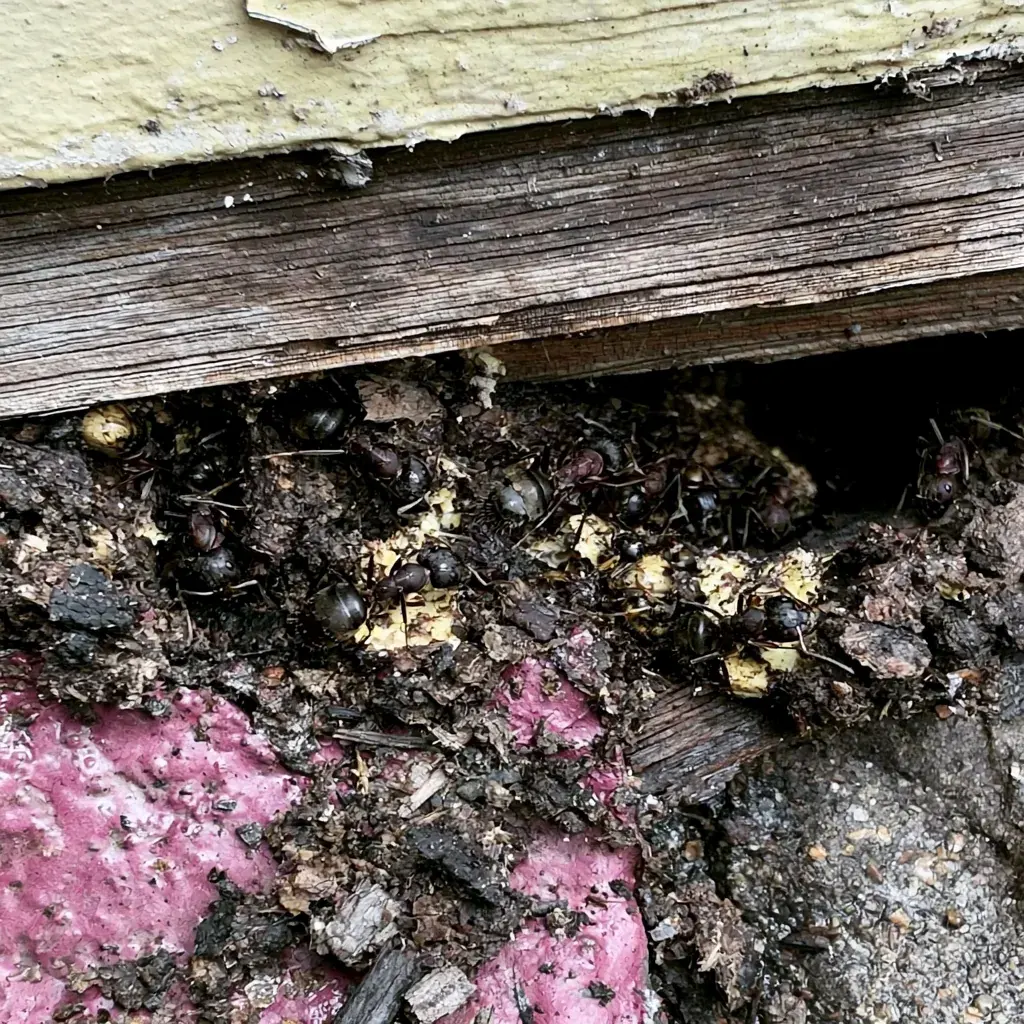
How Termites Reach Structural Wood
In High Point, soil can meet structural wood at porch posts, trim near grade, or supports visible from an accessible area. The Big Chair and High Point Museum are familiar local reference points, but neither says anything about a particular property's foundation or termite condition.
High Point homes and small commercial buildings differ in how much of their lower framing an inspector can see. A property near Jamestown or elsewhere in the area still needs its own contact points traced; a town name or nearby landmark cannot establish whether termites are present.
Termite questions reach us from High Point and Guilford, including from owners of houses and small commercial properties. Ask the pros we connect you with to check the property address directly; a general service-area description cannot confirm coverage for a specific location.
Signs Around the Structure
- ENTRY
- Subterranean termites may enter through concealed contact between soil and structural wood.
- CONTACT
- Porch posts, low siding, and supports are examples of places to check for direct wood-to-soil contact.
- LIMIT
- Contact can hide the route termites use, so a visible surface alone may not show what is behind it.
- RECORD
- The licensed pros we connect you with can discuss whether further evaluation may be appropriate.
- ASSESS
- Termite treatment choices depend on inspection findings and the conditions of the property.
- Follow-Up
- Seasonal swarming can make termite activity more noticeable, while wood-to-soil contact may remain concealed year-round. In High Point, an inspection can assess the same contact points in any season; a quiet exterior does not establish that the route or risk condition is gone.
- Follow-Up
- an estimated $75–$250
Mud Tubes or Surface Marks
Moisture-related termite risk. Damp conditions near wood can support termite activity, while direct wood-to-soil contact can provide a concealed route from the ground. An inspection may find both, but each calls for its own observation and assessment. Moisture-related termite risk is assessed by looking for damp conditions near wood and their source. Wood-to-soil risk is assessed by locating direct contact between structural wood and soil, then checking nearby areas for termite evidence. Both concerns can occur together, but they are distinct inspection findings.
Safety Steps Around Termite Treatment
The pro first traces the wood-to-soil contact, checks accessible framing and nearby surfaces, and records signs of activity or damage. The findings help distinguish a risk condition from evidence of an infestation. If wood is hidden, the report should say what could not be inspected and whether further evaluation is needed.
If correction is appropriate, the pro explains how the contact can be separated or otherwise addressed and identifies any treatment warranted by the findings. The owner should receive the scope and follow-up terms in writing. Structural repairs may need separate planning if damaged wood is found.
A treatment visit can complete a specified application, but that alone does not establish future protection. Consider ongoing cover only when the written plan explains what will be monitored, how often stations or other measures will be checked, and what would prompt further work.
INSPECTION FINDINGS AND ROUTINE TERMITE MONITORING
| Property Factors |
Treatment Fit |
|---|
| An initial clue in a single area | Written scope and follow-up |
| Termite signs return after treatment | Follow-up inspection |
| Activity reported beyond one isolated spot | Treatment complete; monitoring reviewed |
Safe Steps Before a Termite Inspection
From a safe position, note where wood meets soil and take clear photos with the date and location. Keep the area accessible for an inspection, but do not dig around supports, pull apart trim, or disturb suspected tubes. Those steps can hide evidence or affect structural wood; leave the assessment and any correction to a qualified professional.
When Damaged Wood Needs Review
Wood-to-soil contact is a property concern, not usually an immediate household safety hazard. The practical concern is that termites may reach structural wood unseen and weaken it over time. If a beam or support looks damaged or feels unstable, keep people clear and have the area assessed promptly. Do not rely on a sound surface to rule out concealed damage.
See what affects termite service cost
Before choosing treatment, request an inspection and a written proposal tied to observed activity, property conditions, and the work recommended.The guide range describes typical treatment work; inspection findings may call for a different scope, and monitoring, follow-up visits, or wood repairs may be separate. For a High Point home, ask how the findings and included work affect the quote. Mention any signs noticed near High Point Museum, and confirm visit charges and the written scope with the pros we connect you with.The pricing guide explains cost factors and bands, while the Termite Inspection page outlines termite inspection, treatment, and monitoring options.